
SALVATION IN BIBLE PROPHECY
God’s Redemptive Plan from the Beginning
Salvation is not an afterthought in Scripture, but a central theme woven into the fabric of biblical prophecy. From the earliest pages of the Old Testament, God reveals a redemptive plan to rescue humanity from sin and restore a relationship with Himself. Many think that God had to invoked “Plan B” after the fall of man as in (Genesis chapter 3). However, this is not so. The Almighty and All-knowing God of the Bible, who knows the end from the beginning, only ever had one plan – “Plan A”. God does not make mistakes.
The Bible declares that GOD promised ETERNAL LIFE (which is the hope of salvation) BEFORE THE WORLD BEGAN …
Titus 1:2
In hope of eternal life, which God, that cannot lie, promised before the world began
SALVATION = ETERNAL LIFE
Natural man is born MORTAL, i.e. subject to death. God is IMMORTAL, not subject to death – HE IS ETERNAL. God’s redemptive plan of Salvation is centered upon His promise to raise man from his state of mortality to a state of immortality –
THIS IS GOD’S OFFER OF SALVATION
ETERNAL LIFE
Progressive Development of God’s Plan
Bible prophecy progressively unveils God’s plan, pointing forward to the coming Deliverer and Redeemer whose work would bring forgiveness, reconciliation, and eternal life. The New Testament presents Jesus Christ as the fulfilment of these prophetic promises.
Genesis 3:15 The Seed of the Woman and the Seed of the Serpent
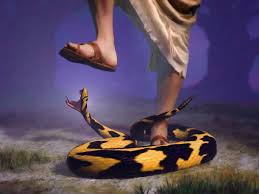
The first prophetic hint of salvation appears immediately after humanity’s fall into sin as we read in Genesis 3:15 …
Genesis 3:15
And I will put enmity between thee and the woman, and between thy seed and her seed; it shall bruise thy head, and thou shalt bruise his heel.
This is often called the protoevangelium or “first gospel”, in which God declares that the seed of the woman (the coming Messiah) would bruise the serpent’s head while suffering injury Himself.
This prophecy anticipates the future victory over Satan achieved through the suffering Messiah. The New Testament identifies this victory in Jesus Christ, whose death and resurrection decisively defeated sin and death (Hebrews 2:14; 1 John 3:8).
Hebrews 2:14
Forasmuch then as the children are partakers of flesh and blood, he also himself likewise took part of the same; that through death he might destroy him that had the power of death, that is, the devil;1 John 3:8
He that committeth sin is of the devil; for the devil sinneth from the beginning. For this purpose the Son of God was manifested, that he might destroy the works of the devil.
God’s Covenant with Abraham
God’s covenant with Abraham further clarifies the promise of salvation. In Genesis 12:3 and 22:18, God promises that through Abraham’s offspring all nations of the earth would be blessed.
Genesis 12:3
And I will bless them that bless thee, and curse him that curseth thee: and in thee shall all families of the earth be blessed.Genesis 22:18
And in thy seed shall all the nations of the earth be blessed; because thou hast obeyed my voice.
This blessing extends beyond ethnic Israel to the entire world. The apostle Paul explicitly interprets this promise as fulfilled in Christ, stating that Jesus is the promised “seed” through whom salvation comes to both Jews and Gentiles (Galatians 3:8, 16).
Galatians 3:8, 16
And the scripture, foreseeing that God would justify the heathen through faith, preached before the gospel unto Abraham, [saying], In thee shall all nations be blessed…Now to Abraham and his seed were the promises made. He saith not, And to seeds, as of many; but as of one, And to thy seed, which is Christ.
God-appointed Sacrifice
The sacrificial system established under the Mosaic Law prophetically foreshadowed the means of salvation. Animal sacrifices, particularly on the Day of Atonement (Leviticus 16), taught that forgiveness required the shedding of blood. These sacrifices were temporary and symbolic, pointing to a greater, final sacrifice. The New Testament explains that Jesus fulfilled this system as the perfect and once-for-all offering for sin (Hebrews 9:11–14; 10:1–10).
Hebrews 9:11-14
But Christ being come an high priest of good things to come, by a greater and more perfect tabernacle, not made with hands, that is to say, not of this building; Neither by the blood of goats and calves, but by his own blood he entered in once into the holy place, having obtained eternal redemption [for us]. For if the blood of bulls and of goats, and the ashes of an heifer sprinkling the unclean, sanctifieth to the purifying of the flesh: How much more shall the blood of Christ, who through the eternal Spirit offered himself without spot to God, purge your conscience from dead works to serve the living God?
Jesus Christ – The Ultimate Sacrifice Once for All …
Hebrews 10:1-10
For the law having a shadow of good things to come, [and] not the very image of the things, can never with those sacrifices which they offered year by year continually make the comers thereunto perfect. For then would they not have ceased to be offered? because that the worshippers once purged should have had no more conscience of sins.
But in those [sacrifices there is] a remembrance again [made] of sins every year. For [it is] not possible that the blood of bulls and of goats should take away sins.
Wherefore when he cometh into the world, he saith, Sacrifice and offering thou wouldest not, but a body hast thou prepared me: In burnt offerings and [sacrifices] for sin thou hast had no pleasure. Then said I, Lo, I come (in the volume of the book it is written of me,) to do thy will, O God. Above when he said, Sacrifice and offering and burnt offerings and [offering] for sin thou wouldest not, neither hadst pleasure [therein]; which are offered by the law; Then said he, Lo, I come to do thy will, O God. He taketh away the first, that he may establish the second. By the which will we are sanctified through the offering of the body of Jesus Christ once [for all].
Jesus Christ – Our Substitutionary Sacrifice
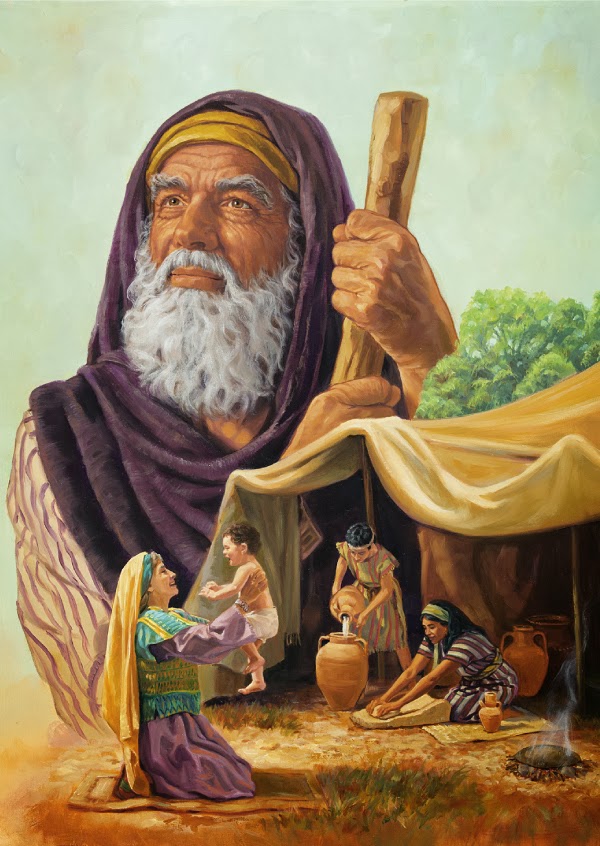
A foreshadow of the future substitutionary sacrifice of the Lord Jesus Christ, the unique Son of God, is detailed in Genesis 22, in which the patriarch Abraham was called upon by God to sacrifice his son Isaac. Isaac, the miracle son of promise in Abraham’s old age, stood as a representative pre-advent figure of Jesus Christ.
Abraham took Isaac to the top of Mount Moriah and was about to plunge the knife into Isaac when the Angel of the Lord called out of heaven …
Genesis 22:10-12
And Abraham stretched forth his hand, and took the knife to slay his son. And the angel of the LORD called unto him out of heaven, and said, Abraham, Abraham: and he said, Here [am] I. And he said, Lay not thine hand upon the lad, neither do thou any thing unto him: for now I know that thou fearest God, seeing thou hast not withheld thy son, thine only [son] from me.
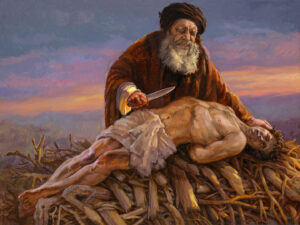
At this point, Abraham saw a ram caught in a thicket by his horns …
Genesis 22:13-14
And Abraham lifted up his eyes, and looked, and behold behind [him] a ram caught in a thicket by his horns: and Abraham went and took the ram, and offered him up for a burnt offering in the stead of his son. And Abraham called the name of that place Jehovah jireh (The LORD PROVIDES): as it is said [to] this day, In the mount of the LORD it shall be seen.
God provided the substitute sacrifice in the Ram caught in the thicket. The Ram – a Male sheep – represented Jesus Christ – who would willingly offer Himself on our behalf.
He who knew no sin became sin for us …
2 Corinthians 5:21
For he hath made him [to be] sin for us, who knew no sin; that we might be made the righteousness of God in him.
The whole episode of Abraham offering Isaac and God’s intervention was a foreshadow of Christ being put to death and resurrected …
Hebrews 11:17-19
By faith Abraham, when he was tried, offered up Isaac: and he that had received the promises offered up his only begotten [son], Of whom it was said, That in Isaac shall thy seed be called: Accounting that God [was] able to raise [him] up, even from the dead; from whence also he received him in a figure.
That JESUS CHRIST came as GOD IN THE FLESH is eveident from Abraham’s statement on the lead up to sacrificing Isaac …
Genesis 22:8
And Abraham said, My son, GOD WILL PROVIDE HIMSELF A LAMB for a burnt offering: so they went both of them together.
The Passover
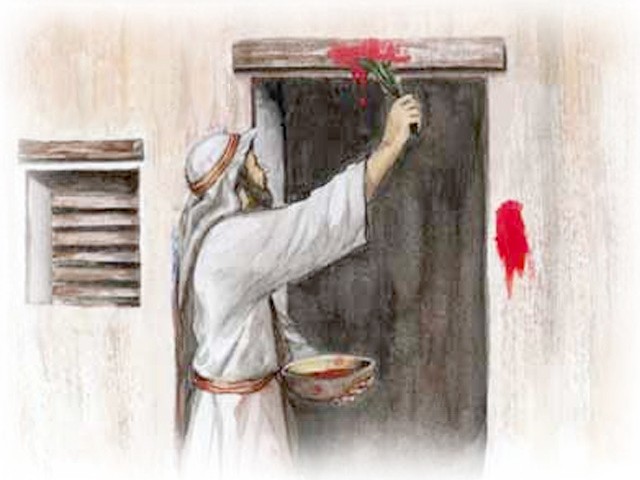
The Passover event stands as a powerful prophetic picture of salvation. In Exodus 12, the blood of a spotless lamb protected Israel from judgment and secured their deliverance from bondage. The New Testament identifies Jesus as the ultimate Passover Lamb, whose blood brings deliverance from sin and death.
John the Baptist identified Jesus Christ as the perfect, spotless Lamb of God …
John 1:29
The next day John seeth Jesus coming unto him, and saith, Behold the Lamb of God, which taketh away the sin of the world.
1 Corinthians 5:7
Purge out therefore the old leaven, that ye may be a new lump, as ye are unleavened. For even Christ our passover is sacrificed for us:
The Sacrifice of Jesus Christ Foreordained Before the Foundation of the World
1 Peter 1:18-20
Forasmuch as ye know that ye were not redeemed with corruptible things, [as] silver and gold, from your vain conversation [received] by tradition from your fathers;
But with the precious blood of Christ, as of a lamb without blemish and without spot: Who verily was foreordained before the foundation of the world, but was manifest in these last times for you
The Exodus – Departure from Egypt – the House of Bondage
The sacrificial lamb having been slain and consumed, and the blood applied to the doorposts and lintels (Exodus 12:21-23), the children of Israel still remained in EGYPT – the House of Bondage (Exodus 13:3). They had to be BROUGHT OUT OF EGYPT – to make their EXIT – hence the name of the book EXODUS.
God was going to take them out with an HIGH HAND – i.e. by the POWER of the ALMIGHTY GOD
Exodus 14:8; Deuteronomy 33:3)
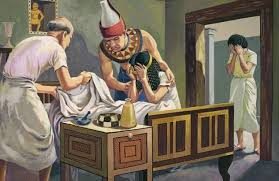
After the 10th and final plague that God sent upon Egypt – the death of the firstborn – Pharaoh let the people go (Exodus 12:29-32). All the firstborn not covered by the blood of the sacrificial lamb died.
The Pillar of Cloud by Day and Fire by Night
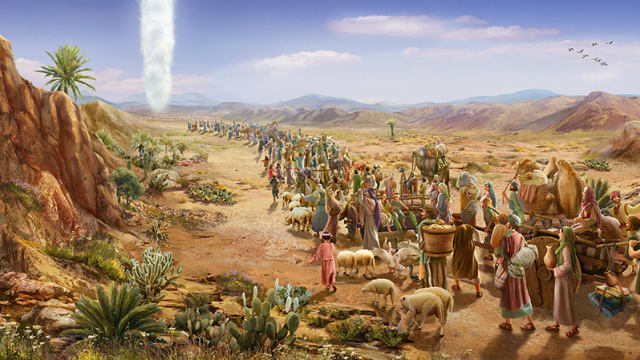
To secure their salvation God led the way of the children of Israel by a pillar of cloud by day and a pillar of fire by night …
Exodus 13:21-22
And the LORD went before them by day in a pillar of a cloud, to lead them the way; and by night in a pillar of fire, to give them light; to go by day and night: He took not away the pillar of the cloud by day, nor the pillar of fire by night, [from] before the people.
The pillar stood as a foreshadow of the Holy Spirit leading the way to full salvation …
Guided into All Truth through The Spirit
John 16:13-14
Howbeit when he, the Spirit of truth, is come, he will guide you into all truth: for he shall not speak of himself; but whatsoever he shall hear, [that] shall he speak: and he will shew you things to come. He shall glorify me: for he shall receive of mine, and shall shew [it] unto you.
Crossing the Sea
Although the blood of the Passover lamb had been shed and applied to the doorposts and lintels of the Israelites, they remained in Egypt – the House of Bondage (a type of remaining in sin). The separation of the Children of Israel from Egypt had yet to take place.
Eventually God led the Children of Israel to the banks of the Sea, whereupon they were hemmed in by the mountains on one side and the sea on the other. In addition, Pharaoh relented and pursued the Israelites to overtake them. But God commanded through Moses that the people go forward …
Exodus 14:13-16
And Moses said unto the people, Fear ye not, stand still, and see the salvation of the LORD, which he will shew to you to day: for the Egyptians whom ye have seen to day, ye shall see them again no more for ever. The LORD shall fight for you, and ye shall hold your peace. And the LORD said unto Moses, Wherefore criest thou unto me? speak unto the children of Israel, that they go forward: But lift thou up thy rod, and stretch out thine hand over the sea, and divide it: and the children of Israel shall go on dry [ground] through the midst of the sea.
The Pillar of Cloud and Fire separated the children of Israel from the Egyptians – giving light to Irsrael and darkness to the Egyptians (Exodus 14:19-20). Moses stretched out his hand with the Rod of God and the children of Israel crossed the sea on dry ground, whilst the pursuing Egyptians were drowned (Exodus 14:21-31).
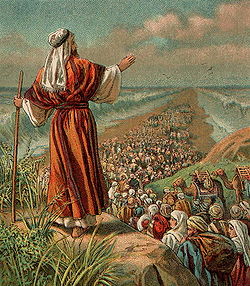
A Prototype of Baptism in Water and Spirit
The crossing of the Sea, which separated the Israelites from Egypt, stood as a prototype of the need for baptism in water and the Holy Spirit in the New Testament era …
1 Corinthians 10:1-2
Moreover, brethren, I would not that ye should be ignorant, how that all our fathers were under the cloud, and all passed through the sea; And were all baptized unto Moses in the cloud and in the sea;
Whereas the Old Testament people were baptised unto Moses, the new Testament requires baptism unto CHRIST.
(1 Corinthians 12:13; Romans 8:9; Galatians 3:27).
The Prophets
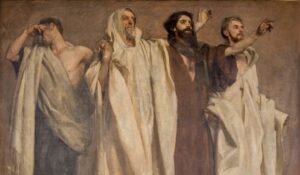
The Old Testament Prophets declared beforehand various aspects of the coming Messiah – the Saviour – concerning His miraculous birth, ministry and works, sacrificial death, resurrection and ascension to glory. The combined testimony of the prophets built a portrait that would be fulfilled by Jesus Christ …
1 Peter 1:10-11
Of which salvation the prophets have enquired and searched diligently, who prophesied of the grace [that should come] unto you: Searching what, or what manner of time the Spirit of Christ which was in them did signify, when it testified beforehand the sufferings of Christ, and the glory that should follow.
The Prophet Isaiah
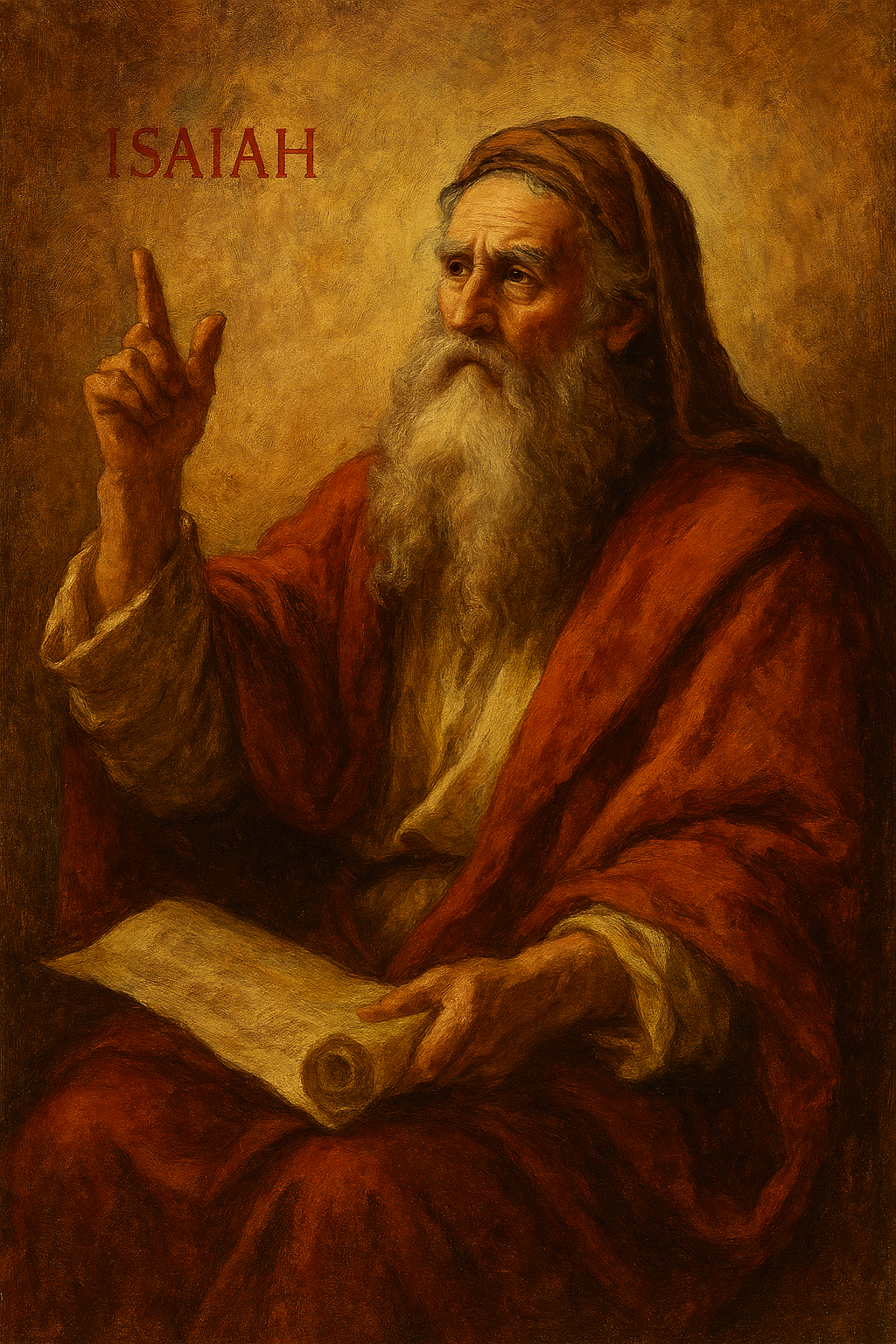
Isaiah 53 provides one of the most detailed messianic prophecies, describing a suffering servant who would bear the sins of many and bring healing through His wounds. Though more than 700 years before the New Testament era, this passage closely aligns with the crucifixion of Jesus.
The New Testament repeatedly affirms that Jesus fulfilled this prophecy through His sacrificial death
Isaiah 53:4–6
Surely he hath borne our griefs, and carried our sorrows: yet we did esteem him stricken, smitten of God, and afflicted. But he [was] wounded for our transgressions, [he was] bruised for our iniquities: the chastisement of our peace [was] upon him; and with his stripes we are healed. All we like sheep have gone astray; we have turned every one to his own way; and the LORD hath laid on him the iniquity of us all.
Matthew 8:16–17
When the even was come, they brought unto him many that were possessed with devils: and he cast out the spirits with [his] word, and healed all that were sick: That it might be fulfilled which was spoken by Esaias the prophet, saying, Himself took our infirmities, and bare [our] sicknesses.
1 Peter 2:24
Who his own self bare our sins in his own body on the tree, that we, being dead to sins, should live unto righteousness: by whose stripes ye were healed.
The Prophet Micah
The prophet Micah foretold the birthplace of the Messiah, declaring that a ruler would come from Bethlehem whose origins are “from of old” …
Micah 5:2
But thou, Bethlehem Ephratah, [though] thou be little among the thousands of Judah, [yet] out of thee shall he come forth unto me [that is] to be ruler in Israel; whose goings forth [have been] from of old, from everlasting.
This prophecy emphasizes both the humanity and divine pre-existence of the Saviour.
The Gospel of Matthew records that Jesus was born in Bethlehem, explicitly identifying Him as the fulfilment of Micah’s prophecy and the promised ruler of Israel …
Matthew 2:1-6
Now when Jesus was born in Bethlehem of Judaea in the days of Herod the king, behold, there came wise men from the east to Jerusalem, Saying, Where is he that is born King of the Jews? for we have seen his star in the east, and are come to worship him. When Herod the king had heard [these things], he was troubled, and all Jerusalem with him. And when he had gathered all the chief priests and scribes of the people together, he demanded of them where Christ should be born. And they said unto him, In Bethlehem of Judaea: for thus it is written by the prophet, And thou Bethlehem, [in] the land of Juda, art not the least among the princes of Juda: for out of thee shall come a Governor, that shall rule my people Israel.
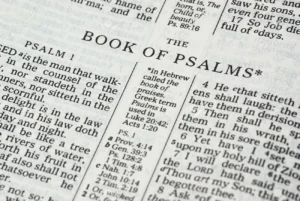
The Psalms
The Psalms also contain prophetic descriptions of salvation through the Messiah.
Psalm 22 vividly portrays the suffering of a righteous individual whose hands and feet are pierced and whose garments are divided by casting lots. These details correspond strikingly with the crucifixion of Jesus.
The New Testament writers recognize Psalm 22 as a prophetic depiction of Christ’s suffering, demonstrating that even Israel’s worship literature pointed forward to salvation through the Messiah
(Psalm 22:16–18; John 19:23–24).
Psalm 22:16-18
For dogs have compassed me: the assembly of the wicked have inclosed me: they pierced my hands and my feet. I may tell all my bones: they look [and] stare upon me. They part my garments among them, and cast lots upon my vesture.
John 19:23-24
Then the soldiers, when they had crucified Jesus, took his garments, and made four parts, to every soldier a part; and also [his] coat: now the coat was without seam, woven from the top throughout. They said therefore among themselves, Let us not rend it, but cast lots for it, whose it shall be: that the scripture might be fulfilled, which saith, They parted my raiment among them, and for my vesture they did cast lots. These things therefore the soldiers did.
The Prophet Jeremiah
Jeremiah prophesied concerning a “NEW COVENANT” in which God would forgive sins and write His law on the hearts of His people. Jesis Christ came to establish and pour out the benefits of the New Covenant …
Jeremiah 31:31-34
Behold, the days come, saith the LORD, that I will make a new covenant with the house of Israel, and with the house of Judah: Not according to the covenant that I made with their fathers in the day [that] I took them by the hand to bring them out of the land of Egypt; which my covenant they brake, although I was an husband unto them, saith the LORD: But this [shall be] the covenant that I will make with the house of Israel; After those days, saith the LORD, I will put my law in their inward parts, and write it in their hearts; and will be their God, and they shall be my people. And they shall teach no more every man his neighbour, and every man his brother, saying, Know the LORD: for they shall all know me, from the least of them unto the greatest of them, saith the LORD: for I will forgive their iniquity, and I will remember their sin no more.
This promise of inner transformation and complete forgiveness goes beyond the old covenant system. At the Last Supper, Jesus declared that His death inaugurated this new covenant, fulfilling Jeremiah’s prophecy and establishing salvation through grace rather than law …
Luke 22:19-20
And he took bread, and gave thanks, and brake [it], and gave unto them, saying, This is my body which is given for you: this do in remembrance of me. Likewise also the cup after supper, saying, This cup [is] the new testament in my blood, which is shed for you.
Hebrews 8:6-13
But now hath he [i.e. Jesus Christ, the Messiah] obtained a more excellent ministry, by how much also he is the mediator of a better covenant, which was established upon better promises. For if that first [covenant] had been faultless, then should no place have been sought for the second. For finding fault with them, he saith, Behold, the days come, saith the Lord, when I will make a new covenant with the house of Israel and with the house of Judah: Not according to the covenant that I made with their fathers in the day when I took them by the hand to lead them out of the land of Egypt; because they continued not in my covenant, and I regarded them not, saith the Lord. For this [is] the covenant that I will make with the house of Israel after those days, saith the Lord; I will put my laws into their mind, and write them in their hearts: and I will be to them a God, and they shall be to me a people: And they shall not teach every man his neighbour, and every man his brother, saying, Know the Lord: for all shall know me, from the least to the greatest. For I will be merciful to their unrighteousness, and their sins and their iniquities will I remember no more. In that he saith, A new [covenant], he hath made the first old. Now that which decayeth and waxeth old [is] ready to vanish away.
The Prophet Daniel
The prophet Daniel foretold the timing and purpose of the Messiah’s coming.
In Daniel 9:24–26, the Messiah is described as being “cut off” … to bring an end to sin and establish everlasting righteousness. This prophecy connects the Messiah’s death directly to salvation.
The New Testament presents Jesus’ crucifixion as the moment when sin was dealt with decisively and righteousness was made available to all who believe …
Romans 3:21-26
But now the righteousness of God without the law is manifested, being witnessed by the law and the prophets; Even the righteousness of God [which is] by faith of Jesus Christ unto all and upon all them that believe: for there is no difference: For all have sinned, and come short of the glory of God; Being justified freely by his grace through the redemption that is in Christ Jesus: Whom God hath set forth [to be] a propitiation through faith in his blood, to declare his righteousness for the remission of sins that are past, through the forbearance of God; To declare, [I say], at this time his righteousness: that he might be just, and the justifier of him which believeth in Jesus.
Watch the Video on Daniel’s 70 Weeks prophecy below …
The Resurrected Christ
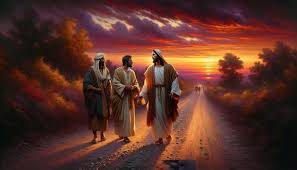
The New Testament writers consistently emphasize that Jesus did not come unexpectedly but in fulfilment of prophecy. After His resurrection, Jesus Himself explained to His disciples that the Law, the Prophets, and the Psalms spoke of His suffering and resurrection as necessary for salvation …
Luke 24:25-27
Then he said unto them, O fools, and slow of heart to believe all that the prophets have spoken: Ought not Christ to have suffered these things, and to enter into his glory? And beginning at Moses and all the prophets, he expounded unto them in all the scriptures the things concerning himself.Verses 44-49
And he said unto them, These [are] the words which I spake unto you, while I was yet with you, that all things must be fulfilled, which were written in the law of Moses, and [in] the prophets, and [in] the psalms, concerning me. Then opened he their understanding, that they might understand the scriptures, And said unto them, Thus it is written, and thus it behoved Christ to suffer, and to rise from the dead the third day: And that repentance and remission of sins should be preached in his name among all nations, beginning at Jerusalem. And ye are witnesses of these things. And, behold, I send the promise of my Father upon you: but tarry ye in the city of Jerusalem, until ye be endued with power from on high.
This confirms that Bible prophecy forms a unified witness to God’s redemptive plan centered in Christ
Conclusion
In conclusion, salvation in Bible prophecy unfolds as a coherent and purposeful narrative that finds its fulfilment in Jesus Christ the Messiah. From Genesis to the Prophets, Scripture anticipates a Saviour who would suffer, die, rise again and ascend into heaven to redeem humanity. The New Testament proclaims that this promised salvation has been accomplished through Jesus, offering forgiveness of sins and eternal life to all who place their faith in Him. Bible prophecy therefore stands as a powerful testimony to the faithfulness of God and the certainty of salvation in Christ.