
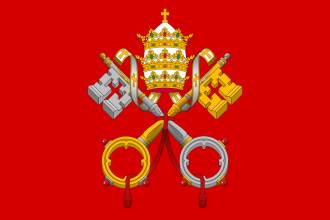
Bible Prophecy describes a period of 1260 years of absolute dominion that would be exercised by the Papacy, and after which its influence would be restricted. This period was completed by the unification of Italy; the proclamation of Rome as the capital of the Kingdom of Italy, and the restriction of the former Papal States to the Vatican in Rome (which is the extent of official Papal territory to this day). This is a very brief summary of some of the key facts as they relate to te fulfil,ent of this very important prophecy.
KEY PROPHETIC TIME MEASURES
There are 3 key prophetic time measures that identify a common period of prescribed temporal power to be exercised by the Papacy. These are:
-
- 1260 prophetic days (= 1260 actual years) (Rev 11:3 & Rev 12:6)
- Time, Times and Half-a-Time (= 360 + 720 + 180 = 1260 Prophetic days/years) (Dan 7:23-26; Dan 12:7 & Rev 12:14)
- 42 Months (= 42 x 30 Prophetic days = 1260 Prophetic days/years) (Dan 7:8-11; Rev 11:2 & Rev 13:3-9)
Based on the day-for-a-year principle (Num 14:34 & Ezek 4:6), and the recognition that a prophetic ‘Time’ is equal to 360 prophetic days (the average of Lunar and solar years), the prescribed prophetic period expressed in the 3 ways outlined above represents an actual period of 1260 normal years.
THE LITTLE HORN
Amongst other symbols, the Papacy is identified in the Bible as the “little Horn”; emerging out of the 10 horns on the head of the 4th beast – Rome (Daniel 7:8). History verifies that Imperial Rome broke into 10 Gothic Kingdoms, out of which the little horn emerged, speaking great blasphemies against God and making war with the saints (this is antichrist Papal dogma, at enmity with Christ and the true Church). History records that the Papacy ruled in Europe with absolute authority for more than 1000 years.

KEY DATES RELATED TO PAPAL DOMINION
History reveals 4 key starting dates for the rise of Papal power, which took place after the fall of the Imperial pagan Roman Empire. The 4th (Roman) beast is described as THE BEAST that WAS, IS NOT and yet IS (Rev 17:8) – this represents the fact that Imperial Rome was in power for a period; then it no longer existed in its original form after it collapsed under a series of Gothic invasions; yet it revived under Papal dominion – albeit in a different form. Adding 1260 years to each of the dates for the commencement of the power of the Papacy bring us to significant events that mark the end of the absolute power of the Papacy. The power exercised by the Papacy since the end of the 1260-year period is restricted to its ecclesiastical influence only.
The key dates are as follows:
533 AD
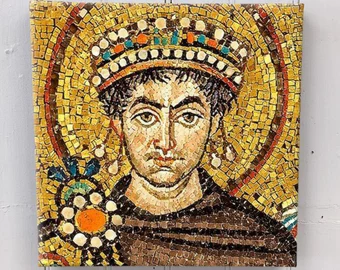
This marked the first decree (Letter) of Emperor Justinian to John I, the Chief Bishop of Rome, declaring John to be the ‘Chief Bishop of all Churches’.
Adding 1260 years to this date brings us to the year 1793. This year marked the French revolution – the beginning of the ‘Reign of Terror’ – Roman Catholicism was officially abolished as the state religion in France. The papacy effectively lost its ‘eldest daughter’. The French King Louis XVI was sentenced to death.
538 AD
This marked a further decree issued by the Emperor Justinian confirming the supremacy of the Bishop of Rome. Perhaps this is the most significant date of the three. Adding 1260 years brings us to the year 1798. History reveals that in this year Napoleon’s General Berthier of France captured Pope Pius VI and declared the temporal power of the Papacy officially abolished. The Papal insignia was removed from the Vatican. The Papacy never fully recovered from this event.
606 AD
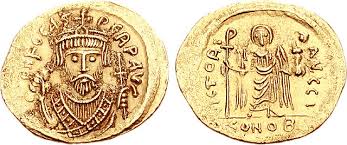
In 606 AD the Emperor Phocus issued a decree (his image on thre coin on the left) , declaring Boniface III (his image on the coin on the right) ‘universal Bishop of all Christendom’. Adding 1260 years brings us to the year 1866.
During 1866 two significant things took place:
(1) The last two Protestants were burned by Papal Decree at Barletta, Italy, marking the end of executions by papal authorities against protestants, and
(2) 1866 marked the beginning of the end of Papal dominion over Italy. From 1833 Giuseppe Garibaldi dedicated himself to the liberation and unification of Italy from Austrian (and ultimately papal) rule. Garibaldi was instrumental in restoring Italian rule by supporting Victor Emmanuel II as King of all Italy, engaging in 3 wars of independence: with the decisive 3rd war commencing in 1866. In the same year the Franco-Prussian war broke out, and Italy became allies with protestant Prussia.
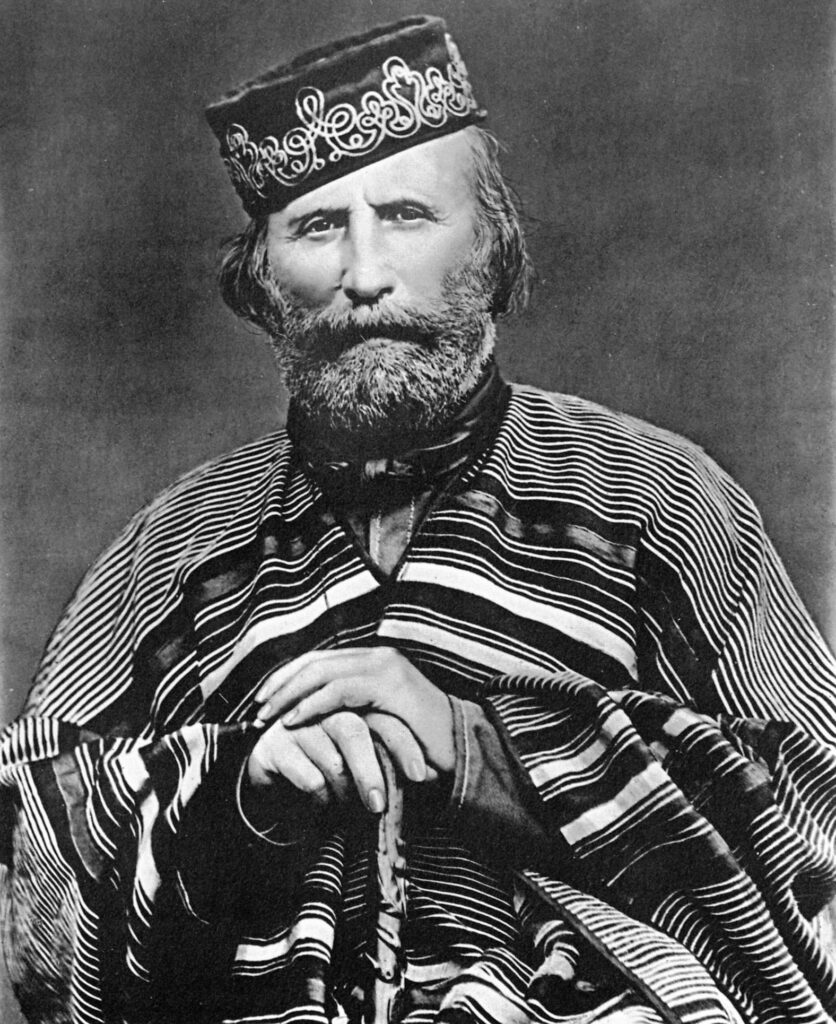
Guiseppe Garibaldi
Revolutionary who United Italy
Giuseppe Garibaldi (July 4, 1807–June 2, 1882) was a military leader who led a movement that united Italy in the mid-1800s. He stood in opposition to the oppression of the Italian people, and his revolutionary instincts inspired people on both sides of the Atlantic.
The French had occupied Rome since 1848 and had allowed Pope Pius IX to re-establish the Papal throne.
In 1867 Garibaldi submitted the following 10 proposals to an International Congress for Peace at Geneva:
- All nations should be regarded as sisters.
- War between them should be thought of as impossible.
- All international quarrels ought to be decided by a Congress.
- The members of this Congress should be democratically elected.
- All peoples, however small, should have the right to representation in this Congress.
- The papacy, being the most harmful of all secret societies, ought to be abolished.
- This present Congress should formally adhere to the religion of God, by which I mean those elements of religion that are demonstrably true and reasonable (Scripture alone), and we should pledge ourselves to propagate it.
- The priesthood of revelation and of ignorance should be replaced by one of wisdom and intelligence.
- Democracy alone can put an end to wars.
- The only legitimate wars are those where a tyrant is opposed by those he has enslaved.
In a vain attempt to thwart the independence of Italy, the Papacy accused Garibaldi of being an atheist. Garibaldi replied by addressing a crowd of 20,000 at Padua (Padova) to set the record straight:
.
Garibaldi’s Address at Padua …
“It is in vain that my enemies try to make me out an atheist. I believe in God. I am of the religion of Christ, not of the religion of the Popes. I do not admit any intermediary between God and man. Priests have merely trust in themselves, in order to make a trade of religion. They are the enemies of true religion, liberty, and progress; they are the original cause of our slavery and degradation, and in order to subjugate the souls of Italians, they have called in foreigners to enchain our bodies. The foreigners we have expelled, now we must expel those mitred and tonsured traitors who summoned them. The people must be taught that it is not enough to have a free country, but that they must learn to exercise the rights and perform the duties of free men. Duty! duty! That is the word. Our people must learn their duties to their families, their duties to their country, their duty to humanity”
610 AD
Emperor Phocus died in 610 A.D.; 4 years after issuing his famous decree, and this marked yet another (and even more) significant point. Adding 1260 years to 610 A.D. brings us to 1870. Because of the Franco-Prussian war, the French army was forced to leave Rome to engage the Prussians in France, leaving the way open for Italian troops to capture Rome from Papal authority on September 20th, and proclaim it the capital of the United Kingdom of Italy.
THE PRISONER OF THE VATICAN
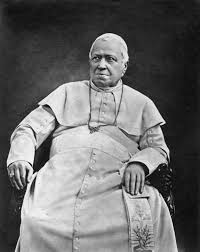
The reigning Pope (Pius IX) thus lost his temporal powers and effectively became the “Prisoner of the Vatican”. Interestingly, during the same year the Roman Catholic Church issued the decree of Papal Infallibility. The power of the Papacy in terms of its military and political status was finished and it then shifted to asserting its ecclesiastical authority as its sole remaining power.
The situation remains the same to this day, and we now await the final judgement of the ‘great whore’ at the coming of Jesus Christ.
Conclusion
The Bible is the inspired and infallible Word of God – the God who knows and declares the end from the beginning (Isaiah 46:9-10). The prophecies of Daniel (Daniel 2 & Daniel 7) declare the pre-determined rise and fall of the Gentile nations and powers, of which the Papacy is clearly identified as the apostate and counterfeit Church of Jesus Christ. As such, the Papacy is destined to be utterly judged and destroyed at the second coming of Jesus Christ. The accurate fulfilment of the foregoing prophecies provides us with absolute assurance that the final consumation of the prophecies declared will surely come to pass exactly as the Bible foretells. We are living in the time within which the fulfilment is clearly on the very horizon.